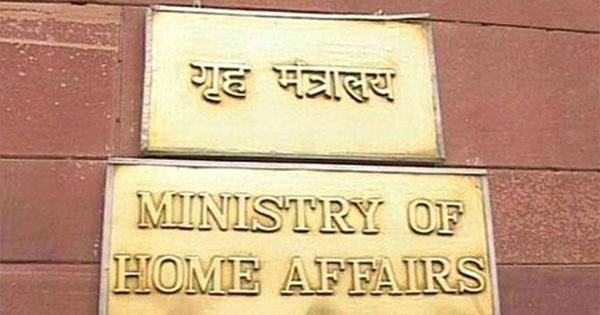
India Citizenship Rules 2026: What District Collector Powers Mean for J&K, Ladakh and CAA
By: News Desk | 19 Aug 2026
India’s Citizenship System Is Moving Closer to the Border
A new move by the Union government to put more citizenship decisions in the hands of district-level authorities is likely to attract attention far beyond the administrative circles where it originated.
The reason is simple: citizenship is one of the most sensitive powers of the Indian state.
It determines who legally belongs to the Republic, who can access the full rights attached to citizenship and, in certain border regions, how the government responds to long-running questions surrounding migration, displacement, security and settlement.
The latest development places district-level authorities in several border states and Union Territories in a position to exercise delegated powers relating to citizenship applications.
For Jammu & Kashmir and Ladakh, the development is particularly significant because both regions sit directly against sensitive international borders and have their own complicated histories of migration, displacement, cross-border movement and security concerns.
But there is an important correction to the starting premise of this story.
This is not simply a brand-new system in which Collectors have suddenly replaced the Ministry of Home Affairs.
India has long used delegated citizenship powers in specified circumstances and jurisdictions. The government’s own citizenship portal lists earlier orders delegating powers to district collectors and other authorities. It also makes clear that citizenship applications under the Citizenship Act can be submitted through district-level offices.
What is changing — and what deserves scrutiny — is the expansion and configuration of delegated authority, particularly for applications under the Citizenship Amendment Act (CAA).
That distinction matters.
First, What Has Actually Changed?
Recent reporting says the Ministry of Home Affairs has designated district collectors in several border states and Union Territories as competent authorities for citizenship applications under the CAA framework.
The jurisdictions reported include Gujarat, Rajasthan, Punjab, West Bengal, Assam, Tripura, Jammu & Kashmir and Ladakh.
This is already different from the list in the summary provided.
Fact-check: Haryana is the questionable entry
The summary lists:
- Jammu & Kashmir
- Ladakh
- Gujarat
- Rajasthan
- Punjab
- Haryana
- Assam
But the current reporting on the latest designation instead identifies West Bengal and Tripura alongside Assam and the western/northern border jurisdictions. Haryana does not appear in that reported list.
This is not a minor editorial detail.
A story about citizenship powers needs the jurisdictional list to be exact because the delegated authority is exercised only within the jurisdictions specified by the Union government.
This Is Also Not a General Citizenship Shortcut
Perhaps the biggest potential misunderstanding is that a district collector can now simply grant citizenship to foreigners living in a border state.
That is not what the law says.
India’s Citizenship Act, 1955 provides different routes to citizenship, including:
- citizenship by birth;
- citizenship by descent;
- registration;
- naturalisation; and
- the special route introduced through Section 6B following the Citizenship Amendment Act.
The government’s citizenship portal continues to distinguish these routes and provides separate eligibility requirements.
For ordinary registration under Section 5, for example, eligibility depends on the applicant’s category and residence requirements. A person of Indian origin ordinarily resident in India generally has to satisfy the statutory residence conditions.
Naturalisation under Section 6 similarly carries statutory conditions involving residence, character and language requirements, among others.
So the Collector’s role is fundamentally about who exercises the delegated decision-making power, not about creating a new class of people who automatically qualify for citizenship.
Where Does the CAA Fit Into This?
This is where the political sensitivity begins.
The Citizenship Amendment Act, 2019 inserted Section 6B into the Citizenship Act.
It created a special pathway for certain members of six religious communities — Hindus, Sikhs, Buddhists, Jains, Parsis and Christians — from Afghanistan, Bangladesh and Pakistan, provided they entered India on or before December 31, 2014, and meet the statutory conditions. The government’s official FAQ confirms these eligibility parameters.
The Citizenship Amendment Rules, 2024 subsequently established the operational framework for Section 6B.
The rules provide for applications to move through a District Level Committee headed by a designated officer, with the final scrutiny and decision handled by an Empowered Committee.
That means the structure is more complicated than:
Applicant → Collector → citizenship certificate.
The actual system involves several stages.
How the CAA Citizenship Process Works
According to the government’s official citizenship portal, a person covered by Section 6B applies electronically.
The application goes through a District Level Committee (DLC) headed by a designated officer.
The DLC verifies documents and administers the oath of allegiance.
The application then moves electronically to the Empowered Committee, which scrutinises the application and can make inquiries considered necessary. The security-agency report is also part of the process.
That is a critical safeguard.
It means decentralisation does not automatically mean the removal of central security scrutiny.
In fact, the official process explicitly retains a security-report component at the Empowered Committee stage.
So Is the MHA Losing Control?
Not in the simplistic sense.
The Ministry of Home Affairs remains the Union government’s central institutional authority over citizenship policy.
What delegation does is allow specified officials to exercise powers that otherwise sit with the Central Government.
This distinction is important in constitutional and administrative terms.
Centralised power
The law gives the Central Government the statutory authority.
Delegated power
The Central Government can authorise specified officers to exercise that authority within defined limits.
The Collector therefore does not become an independent citizenship-making authority.
He or she acts under powers delegated by the Union government.
This is why describing the change as “the MHA handing citizenship powers to states” would be misleading.
The authority remains rooted in the Union government’s statutory framework.
India Has Used This Model Before
This is another important fact missing from much of the initial framing.
The government’s own Indian Citizenship Online portal lists previous orders including:
- delegation of powers to collectors of Anand and Mehsana;
- delegation to district collectors of North and South Goa;
- delegation to collectors of specific districts for registration and naturalisation involving specified minority communities from Afghanistan, Bangladesh and Pakistan.
So the latest move should be viewed as an expansion or reconfiguration of an existing administrative mechanism, not the invention of district-level citizenship authority from scratch.
That significantly changes the interpretation.
Why Put Citizenship Powers Closer to the Border?
The obvious explanation is administrative efficiency.
But border administration is rarely only about efficiency.
District officials are often the first layer of government dealing with:
- migration;
- residence documentation;
- local police verification;
- land and address records;
- refugee settlements;
- cross-border movement;
- identity documents; and
- local security assessments.
A central ministry sitting in New Delhi may have the legal authority, but it does not necessarily possess the same immediate access to district-level records.
The argument for delegation is therefore straightforward:
let the officials closest to the applicant handle verification and processing while retaining national-level safeguards.
J&K and Ladakh Are Different From Ordinary Administrative Districts
The significance becomes sharper in Jammu & Kashmir and Ladakh.
Both Union Territories have international borders and historically sensitive population movements.
J&K borders Pakistan-administered territory and has experienced decades of conflict, infiltration and displacement.
Ladakh shares frontiers with both Pakistan and China, making identity, documentation and border management strategically sensitive.
The government therefore has a strong incentive to combine local administrative knowledge with central security oversight.
That may explain why these two Union Territories appear prominently in the delegated framework.
But it would be premature to conclude that the move is specifically designed to alter the demographic balance of J&K or Ladakh.
The notification itself would need to establish such an objective.
Administrative decentralisation, by itself, is not proof of a demographic policy.
The J&K Angle: Why This Will Be Closely Watched
Citizenship has a particularly complicated political history in Jammu & Kashmir.
Before the constitutional and legal changes of 2019, the former state had a distinctive constitutional arrangement and its own rules surrounding permanent residents.
The reorganisation of Jammu & Kashmir into two Union Territories fundamentally altered that framework.
Today, citizenship is governed by the Indian Citizenship Act and related Union legislation.
But citizenship, domicile, residency and land rights are not identical legal concepts.
That distinction is crucial.
A foreign national becoming an Indian citizen does not automatically answer every question relating to property, domicile or other region-specific rights.
Likewise, possessing a particular residency document does not necessarily mean a person is an Indian citizen.
The debate in J&K often becomes confused because these different legal categories are politically discussed together.
Ladakh Adds Another Layer
Ladakh’s position is equally sensitive, although for different reasons.
The Union Territory has a relatively small population, a strategically critical location and long-running concerns about land, employment, cultural preservation and demographic change.
The region has also been demanding stronger constitutional and administrative safeguards.
Any change affecting citizenship or migration therefore inevitably attracts scrutiny from local political and civil-society groups.
But again, citizenship should not be conflated with local protections over land, employment or cultural institutions.
Those are separate legal and policy questions.
The Real Comparison: Delhi Versus the District
The central question is whether delegated authority produces a better citizenship system.
Here is the more accurate comparison.
| Issue | Centralised decision-making | Delegated district-level decision-making |
|---|---|---|
| Primary decision-maker | Central Government/MHA or empowered central mechanism | Authorised district-level officer/committee |
| Local information | Relatively indirect | More immediate |
| National consistency | Stronger | Requires monitoring |
| Processing | Potentially slower | Potentially faster |
| Security inputs | Central agencies remain important | Local verification can be integrated more directly |
| Accountability | Concentrated at Union level | Shared between local and central authorities |
| Risk | Bureaucratic delay | Uneven implementation |
| Political pressure | National-level scrutiny | Potentially greater local pressure |
| Documentation | Central digital system | Greater local verification burden |
| Best suited for | Uniform national policy | Cases requiring local verification and high administrative volume |
The important word here is potentially.
There is no guarantee that a Collector will process applications faster.
Delegation can shorten decision chains, but it can also create new bottlenecks if district administrations lack staff, training or verification capacity.
The “Fit and Proper Person” Clause Deserves Attention
The phrase in the notification — that the Collector must be satisfied about the applicant’s suitability and that the person is a “fit and proper person” — deserves careful reading.
It does not mean the Collector has unlimited discretion.
Citizenship decisions remain constrained by:
- the Citizenship Act;
- the Citizenship Rules;
- eligibility criteria;
- documentary requirements;
- security verification;
- delegated powers; and
- judicial review.
The phrase therefore functions within a statutory framework.
But it does create an important accountability question:
What exactly are the criteria by which different district officials will determine that an applicant is “fit and proper”?
If the criteria are clearly standardised, decentralisation can work.
If they are interpreted differently from one district to another, applicants could potentially face inconsistent outcomes.
That is one of the strongest arguments for continued central monitoring.
The Security Question Is More Complicated Than It Looks
It would be tempting to assume that putting citizenship decisions in border districts automatically strengthens national security.
Not necessarily.
Local authorities can have better knowledge of an applicant’s:
- residence history;
- local contacts;
- documentation;
- employment;
- family connections; and
- police record.
But central agencies may have access to information concerning:
- cross-border networks;
- national-security databases;
- international links;
- intelligence assessments;
- foreign-state connections.
The most effective model is therefore unlikely to be purely local or purely central.
It is a hybrid model:
Local verification + central intelligence + standardised legal criteria.
The CAA framework already reflects something close to that architecture because the official process includes district-level verification alongside Empowered Committee scrutiny and security-agency inputs.
Could Decentralisation Lead to Political Pressure?
This is one of the legitimate concerns.
District Collectors are career civil servants, but they operate inside local political environments.
A citizenship decision can have consequences far beyond an individual’s legal status.
It can affect:
- voting demographics;
- local political calculations;
- refugee communities;
- border settlements;
- public perceptions of migration;
- communal tensions.
That is why transparency becomes crucial.
If decisions are decentralised, the government should maintain:
- uniform eligibility checklists;
- digital application records;
- mandatory security verification;
- written reasons for rejection;
- audit trails;
- periodic central review; and
- an effective appeal or review mechanism.
Without these safeguards, decentralisation can produce a system that is faster but less predictable.
Could This Change India’s Demography?
This is perhaps the biggest political question — and the easiest one to exaggerate.
The answer is:
Potentially significant in individual districts, but the notification itself does not establish a nationwide demographic transformation.
The number of people eligible under the CAA is constrained by specific statutory conditions, including nationality, religion, date of entry and other requirements.
The government has also said that CAA citizenship is available only to specified communities from the three named countries who entered India by the statutory cut-off.
Therefore, the policy cannot legally be interpreted as an open-ended citizenship channel for all migrants.
The demographic impact will depend on how many eligible applicants actually apply, how many satisfy documentary requirements, how many clear verification and how many applications are approved.
Those are measurable questions.
They should not be replaced by speculation.
Why Border States Are Politically Sensitive
There is another reason this story is likely to attract attention.
The jurisdictions involved sit along several of India’s most politically sensitive migration corridors.
Western frontier
Gujarat, Rajasthan and Punjab face different forms of cross-border movement involving Pakistan.
Eastern frontier
Assam, Tripura and West Bengal have long histories of migration debates involving Bangladesh.
Himalayan frontier
Jammu & Kashmir and Ladakh face highly sensitive security environments involving Pakistan and China.
The administrative rationale therefore has a geographical logic.
The government is putting decision-making closer to locations where questions about identity and migration can become particularly acute.
But There Is a Major Difference Between CAA and Refugee Policy
Another misconception needs correcting.
CAA citizenship is not the same thing as India’s general refugee policy.
India does not have a comprehensive domestic refugee law comparable to some countries.
Foreign nationals can have very different legal statuses depending on the circumstances under which they entered India and the permissions granted to them.
CAA created a specific statutory pathway for a defined category.
It did not automatically regularise every undocumented foreign national.
This distinction should be made clearly in any news report because otherwise the citizenship debate becomes unnecessarily broad.
The Administrative Advantage: Speed
There is, however, a compelling case for decentralisation.
The government’s own citizenship portal tells applicants that hard copies of applications are submitted to the District Collector/District Magistrate/Deputy Commissioner of the area where they ordinarily reside, even though final processing operates within the statutory framework.
That means district administration is already deeply involved.
Giving appropriately delegated officials more decision-making authority can reduce duplication.
Instead of:
District verification → state processing → central processing → repeated queries → final decision
the system can potentially become:
Digital application → local verification → security check → empowered decision.
That could be considerably faster.
But Speed Cannot Come at the Cost of Consistency
This is where the Centre’s role remains important.
Imagine two applicants with almost identical circumstances in two districts.
If one receives citizenship quickly and the other faces repeated requests for additional documentation, confidence in the system will suffer.
Citizenship is not like issuing a local trade licence.
It is a national legal status.
Therefore, the government must maintain national standards even when decisions are delegated.
The principle should be:
Decentralise the administration, not the legal standard.
That is probably the most important lesson from this policy shift.
What Happens If a Collector Makes a Wrong Decision?
This is another question that deserves more attention.
Delegated authority does not eliminate the possibility of review.
Citizenship decisions remain subject to the legal framework and judicial scrutiny.
The government can also establish administrative monitoring mechanisms.
The key issue is whether the system clearly specifies:
- who audits Collector decisions;
- how rejected applications are reviewed;
- what happens when documents are later found fraudulent;
- how security agencies communicate adverse information;
- how quickly erroneous decisions can be corrected.
A decentralised citizenship system needs a stronger audit architecture, not a weaker one.
The Digital Layer Could Be the Real Game-Changer
The most important change may ultimately be less visible than the Collector’s signature.
India has increasingly moved citizenship applications online.
The government portal provides digital application submission, document uploading, status tracking and electronic processing.
That creates the possibility of a system in which the Centre can decentralise the decision while retaining a central digital record.
This is potentially the best of both worlds.
A Collector can access local information.
The MHA can retain national oversight.
Security agencies can feed into the process.
And an audit trail can show who verified what and when.
If implemented properly, this could make the system both faster and more accountable.
What This Means for J&K’s Political Debate
For Jammu & Kashmir, the immediate political reaction is likely to focus on demographics.
But a more useful debate would ask four concrete questions:
1. How many applications are expected?
Without numbers, claims of major demographic change remain speculative.
2. Which applicants are eligible?
CAA eligibility is narrower than general migration.
3. What security checks remain mandatory?
The official process indicates security-agency inputs remain relevant.
4. How will decisions be audited?
This will determine whether decentralisation strengthens or weakens confidence.
Those are the questions that should dominate the debate.
What It Means for Ladakh
Ladakh’s concern will likely be even more focused on the interaction between citizenship and the region’s broader constitutional protections.
The region’s political leadership has repeatedly raised concerns about:
- land;
- jobs;
- cultural identity;
- political representation;
- environmental pressures; and
- constitutional safeguards.
Citizenship is only one piece of that puzzle.
It would therefore be inaccurate to portray the new delegation as an automatic change to Ladakh’s land or employment regime.
It is primarily a citizenship-administration decision.
The Broader National Security Logic
India’s border-management strategy increasingly relies on local administration.
The logic is straightforward.
The closer the state is to a border population, the more quickly it can identify unusual migration patterns and verify local documentation.
But citizenship should not become a substitute for border management.
A person who qualifies for citizenship under law must be assessed according to the law.
Likewise, a person who does not qualify cannot become eligible simply because a district authority believes local conditions make approval convenient.
That legal distinction is essential.
What Could Go Right?
If properly implemented, the policy could deliver several benefits.
Faster decisions
Applicants may spend less time moving between administrative layers.
Better verification
District officials have access to local records and police networks.
Reduced MHA workload
Central authorities can focus on complex, sensitive and disputed cases.
Better border administration
Local officials become more directly responsible for identity verification.
Digital accountability
Central databases can preserve records even when decisions are made locally.
What Could Go Wrong?
The risks are equally real.
Uneven decisions
Different districts may interpret documentation differently.
Local political pressure
Citizenship decisions can become politically sensitive.
Weak documentation
Older migrant and refugee populations may not possess complete records.
Security blind spots
Local officials may not have access to all national-security information.
Administrative overload
Collectors already handle enormous administrative responsibilities.
Legal challenges
Rejected or controversial citizenship decisions could reach courts, especially if applicants allege discriminatory or inconsistent treatment.
The Future: India Is Likely to Move Toward a Hybrid Citizenship System
The long-term direction is becoming clearer.
India does not appear to be choosing between:
central control and local control.
Instead, it is moving toward a hybrid architecture.
The Centre sets the law.
The digital platform standardises applications.
District officials verify documents.
Security agencies assess risks.
Empowered committees make decisions in specified categories.
Courts remain the final institutional check.
That is a more sophisticated system than the simple “MHA versus Collector” comparison suggests.
Three Things to Watch Next
1. The exact notification and jurisdiction list
This is essential, especially because the circulating summary’s inclusion of Haryana conflicts with current reporting that identifies West Bengal and Tripura among the designated jurisdictions.
2. Approval numbers
The real impact will become visible only when data emerges on:
- applications received;
- applications approved;
- applications rejected;
- processing time; and
- security-related objections.
3. Judicial challenges
If applicants argue that district-level decisions are inconsistent, discriminatory or procedurally flawed, courts may be asked to clarify how delegated citizenship authority should operate.
That could establish important precedents.
The Bigger Picture: Citizenship Is Becoming a Border-Administration Tool
The deeper significance of the move lies in the way India is increasingly connecting three traditionally separate administrative questions:
citizenship + migration + border security.
In a country with thousands of kilometres of sensitive international borders, that connection is understandable.
But it must be handled carefully.
Citizenship is a legal status.
Migration is a demographic and administrative phenomenon.
Security is a national-interest question.
They overlap — but they are not interchangeable.
The danger would be allowing security concerns to create arbitrary citizenship standards.
The opposite danger would be treating citizenship verification as an ordinary paperwork exercise while ignoring genuine security risks.
The challenge is to keep both principles intact.
Final Assessment: Decentralisation Is Not the Same as Devolution
The most important takeaway is perhaps this:
India is decentralising the processing and decision-making of certain citizenship applications, but it has not surrendered national control over citizenship policy.
For J&K and Ladakh, the move is particularly consequential because citizenship questions intersect with borders, migration, security and identity.
But the notification should not automatically be read as a demographic engineering exercise.
Nor should it be dismissed as routine bureaucracy.
It sits somewhere in between.
The government is effectively trying to place local eyes on local cases while retaining national control over the rules and security architecture.
Whether that works will depend on what happens after the notification — not on the wording alone.
If district-level authority makes the system faster without compromising uniformity, it could become a useful administrative reform.
If standards begin to vary from district to district, the same decentralisation could create a new layer of litigation and political controversy.
And that is why the next phase matters more than the headline.
The real test will be whether India can bring citizenship decisions closer to the border without allowing the legal standard itself to become local.